
Innovative Hospitality Interior Design with Smart Sensor Technology
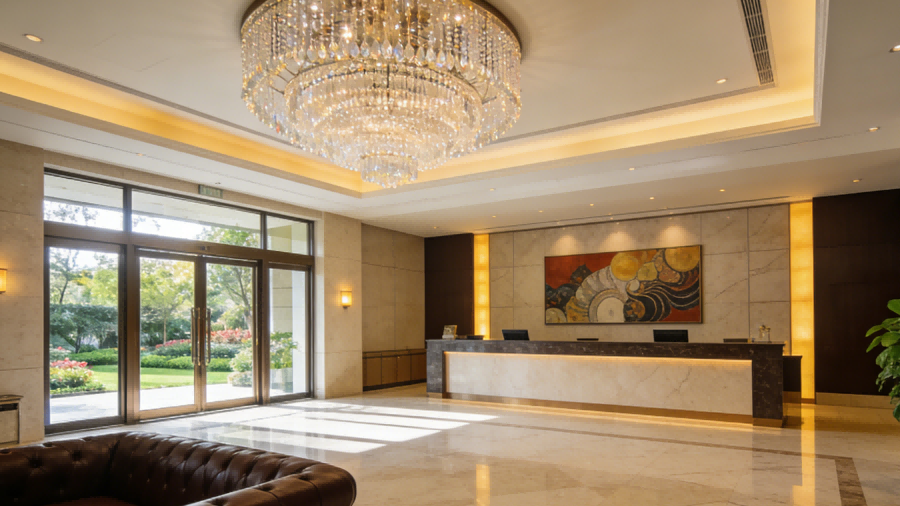
In modern hotel and commercial spaces, hospitality interior design increasingly emphasizes intelligent and efficient management. With technological advancements, smart sensors and smart building sensors have become essential components of interior design and operations management. By integrating advanced sensor technology into space design, hotels can not only enhance the customer experience but also optimize energy use, achieving intelligent management and energy-saving goals.
Benefits of Smart Sensor Technology for Hospitality Interior Design
Integrating smart sensor technology into hospitality interior design goes far beyond simple hardware upgrades. It represents a leap in hotel operational logic from "passive service" to "proactive response."
1. Ultimate Guest Comfort and Personalized Experience
In traditional hospitality interior design, lighting and temperature often require manual adjustment by guests. However, by deploying smart building sensors, the space can sense the presence and activity of people. For example, when a guest enters the room, the lights automatically and gently turn on to a preset welcome mode, and the air conditioning adjusts to the most comfortable temperature. This seamless interaction greatly enhances the hotel's sense of luxury.
2. Significant Energy Efficiency and Sustainability
For hotel operators, energy costs are one of the largest operating expenses. Smart building sensors can monitor the occupancy of guest rooms and public areas in real time. When sensors detect that a room has been unoccupied for an extended period, the system automatically cuts off unnecessary power or adjusts the temperature control system.
3. Data-Driven Operations Management
Smart sensors are not just actuators, but also data collectors. By analyzing the data collected by smart building sensors, management can understand peak periods of foot traffic in public areas. This optimizes cleaning schedules and equipment maintenance plans, ensuring that every inch of the hospitality interior design achieves maximum economic efficiency.

PIR+Light Series for Motion and Ambient Light Control
Balancing automatic lighting with ambient light is a major challenge in the detailed design of hospitality interiors. The PIR+Light Series is a dual-function sensor designed to address this pain point.
This series seamlessly integrates PIR motion detection with ambient light sensing. This dual-sensing mechanism means that the smart sensor can not only determine "whether someone is present" but also "whether the current lighting is sufficient." In hotel corridor design, if natural light during the day is already bright enough, the lights will not turn on even if someone passes by, achieving true smart energy saving.
As part of hospitality interior design, visual interference from the hardware must be minimized. This series measures only 50 × 29 × 50 mm, making it extremely compact. Whether embedded in the ceiling or mounted on a wall, it blends seamlessly with the interior style.
To ensure efficient system collaboration, the PIR+Light Series uses the Tuya Zigbee connectivity protocol. This allows it to easily connect to mainstream smart building sensor networks.
Presence Series for Accurate Human Detection
In traditional hospitality interior design, ordinary infrared sensors often result in situations where guests are still seated in a room, yet the lights are off. The presence series completely solves this problem.
24GHz Millimeter-Wave Radar Technology
The presence series utilizes cutting-edge 24GHz millimeter-wave radar technology. Unlike traditional motion detection, this smart sensor can capture extremely subtle biosignals through Active Detection Mode, including breathing, heartbeat, and subtle limb movements. This means that even if a guest is meditating in the bathtub or reading in bed, smart building sensors can accurately determine that someone is in the room, thus keeping the equipment running and preventing accidental shutdowns.
0-1000 Lux Full-Range Brightness Monitoring
n addition to the human body's perception, this series also integrates a real-time brightness detection function ranging from 0 to 1000 lux. When conducting hospitality interior design, designers can utilize this parameter for settings. For instance, in the evening, when the indoor illuminance is lower than 200 lux and someone is detected present, the warm floor lamps will automatically turn on, creating a warm sense of home for the guests.
360° All-Around Coverage
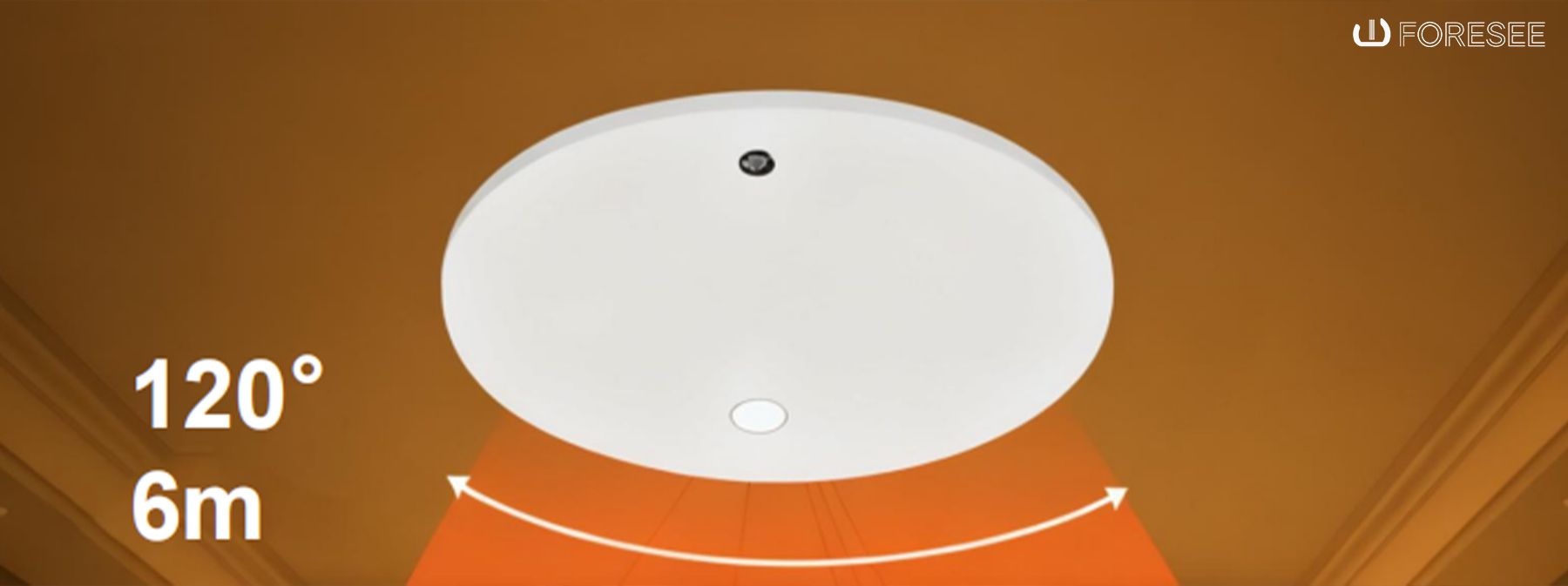
This sensor supports 360° frontal high-sensitivity detection. Installing a presence series smart sensor in a hotel room or conference room provides comprehensive monitoring coverage.
Infrared Series for Multi-Directional Smart Device Control
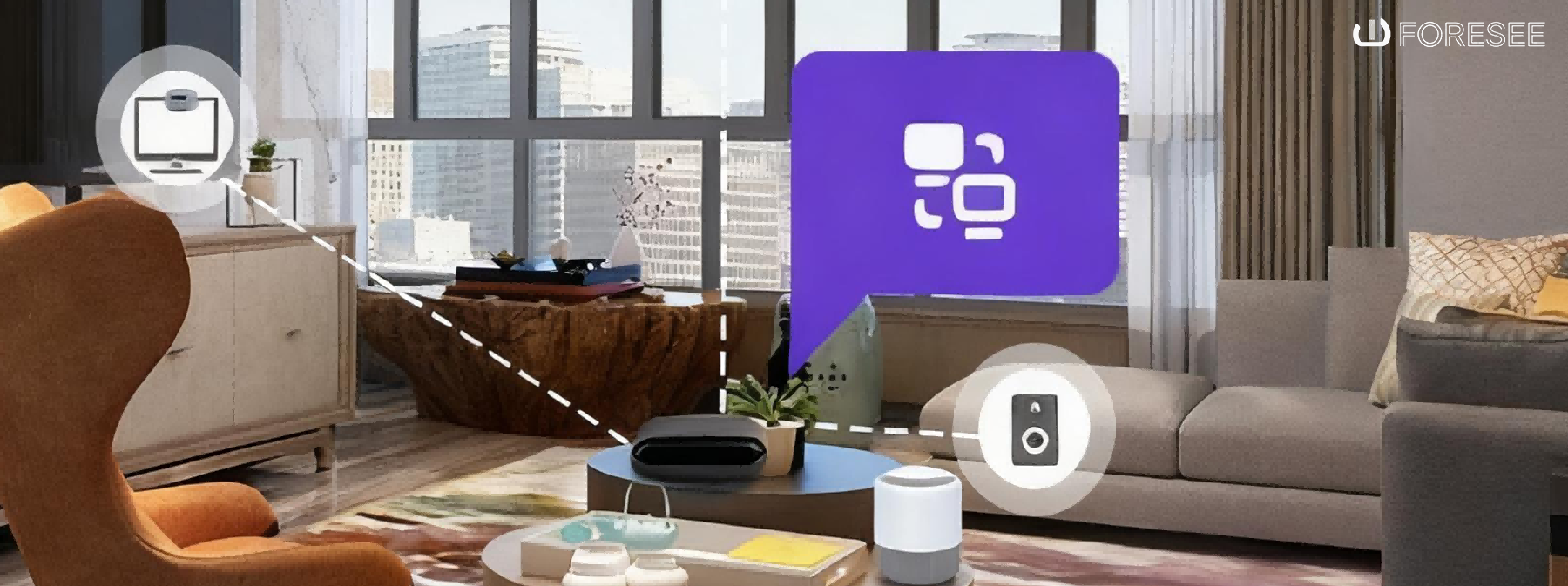
Even in the most cutting-edge hospitality interior design, many audiovisual and climate control devices still rely on infrared remote control. The infrared series is the key hub connecting these traditional devices to a modern network of smart building sensors.
Multi-directional Control and Ultra-long Range
Equipped with seven infrared emitters and one infrared receiver, this series supports multi-directional infrared signal transmission. This means that no matter where the device is located in the room, this smart sensor can achieve stable control. Its linear control distance is up to 15 meters, and its horizontal coverage radius is up to 8 meters, sufficient to cover the living room area of most luxury hotel suites.
Excellent Platform Compatibility
It supports multiple Tuya modules and operates stably on 2.4GHz 802.11 b/g/n networks. This allows it to work collaboratively with other smart building sensors. For example, when the presence sensor confirms that a guest has left the room, the Infrared Series immediately sends a "shut down" command to the TV and split-type air conditioner to ensure no power is wasted.
Industrial-grade Stability
Considering the continuity of hotel operations, this series is designed for ultimate stability. It operates reliably in temperatures ranging from -10°C to 50°C and in humidity environments up to 85% RH. Its low power consumption of ≤0.4W in standby mode, coupled with a standard DC 5V/1A power supply, ensures long-term maintenance-free operation within hospitality interior design solutions.
Driving Hospitality Innovation with Smart Sensors
Smart sensor technology has become an indispensable cornerstone of modern hospitality interior design. From the precise light control of the PIR+Light series to the subtle sensing of human life by the presence series, and the intelligent connectivity of traditional home appliances by the Infrared series, these smart building sensors collectively construct an efficient, comfortable, and sustainable hotel ecosystem.
By integrating 4C Global's smart sensor products, hotels can achieve a perfect closed loop from design concept to actual operation. 4c Global utilizes advanced smart building sensor technology to create a smarter, warmer, and more human-centered accommodation experience for travelers worldwide.